Berlin offers a cultural landscape as diverse and complex as its history, presenting visitors with an extensive array of museums and galleries. Deciding which institutions to prioritize can be a challenge, given the sheer volume and thematic breadth. This guide focuses on identifying key cultural destinations, detailing their specific offerings, and outlining practical considerations to help visitors align their interests with the most suitable experiences. The aim is to provide a structured overview, allowing for informed choices whether your focus is ancient history, contemporary art, or immersive historical narratives. This guide focuses on identifying key cultural destinations, detailing their specific offerings, and outlining practical considerations for your trip.
How to Choose Your Berlin Museum Experience
Selecting the right museums and galleries in Berlin depends heavily on individual interests, available time, and budget. Consider the following factors to refine your itinerary:
- Thematic Interest: Berlin's museums span ancient history, classical art, modern and contemporary art, German history, technology, and specific cultural narratives. Prioritize institutions that align with your primary interests to maximize engagement.
- Time Commitment: Some larger museums, like the Pergamon Museum or the Deutsches Historisches Museum, can easily consume half a day or more. Smaller galleries or specialized museums might be explored in 1-2 hours. Factor in travel time between locations.
- Location and Proximity: Berlin's cultural institutions are often clustered. Museum Island, for example, houses five significant museums within walking distance. Grouping visits geographically can save time and reduce transit fatigue.
- Ticket Options: Evaluate the Berlin Museum Pass, which offers entry to over 30 museums over three consecutive days, or the Berlin WelcomeCard, which combines public transport with museum discounts. For single visits, check online booking options for timed entry, which can bypass queues.
- Accessibility: Confirm accessibility features for specific needs, including wheelchair access, audio guides, and availability of elevators.
- Audience Suitability: Some museums are highly interactive and family-friendly, while others cater to specialized academic interests or require a certain level of historical context.
1. Pergamon Museum
The Pergamon Museum stands as a cornerstone of Museum Island, renowned for its monumental architectural reconstructions. Its primary draw includes the Pergamon Altar, the Ishtar Gate of Babylon, and the Market Gate of Miletus. The collection also features significant Islamic art. The scale of these installations provides a unique, immersive experience, transporting visitors through ancient civilizations and their artistic achievements. The museum's popularity often results in substantial queues, necessitating advance booking for timed entry.
Best for: Visitors interested in ancient architecture, Near Eastern archaeology, and Islamic art, seeking monumental historical exhibits.
Pros: Features globally significant, large-scale architectural reconstructions; diverse collections covering multiple ancient cultures; central location on Museum Island.
Cons: Highly popular, leading to crowds and long waits; significant portions, including the Pergamon Altar hall, are undergoing long-term renovation (check current status); requires substantial time to appreciate fully.
Verdict: An essential visit for its unique, imposing exhibits, but requires careful planning around renovations and crowds. Its historical scope is unparalleled in Berlin.
2. Neues Museum
Also located on Museum Island, the Neues Museum houses extensive collections of Egyptian art, prehistoric artifacts, and early history. Its most famous exhibit is the bust of Nefertiti, a central piece of ancient Egyptian portraiture. The museum's architecture, a blend of reconstructed historical elements and modern additions by David Chipperfield, provides a compelling backdrop to its ancient treasures. The presentation emphasizes the journey of human civilization from the Stone Age to the Middle Ages, with a strong focus on archaeological finds.
Best for: Enthusiasts of ancient Egypt, prehistoric archaeology, and early European history, particularly those interested in iconic artifacts.
Pros: Home to the iconic Nefertiti bust; well-curated collections spanning vast historical periods; impressive architectural restoration; good thematic flow between exhibits.
Cons: Can be very crowded, especially around the Nefertiti bust; limited seating in some areas; requires a focused interest in ancient history to fully appreciate.
Verdict: A must-see for its world-famous Egyptian collection and compelling historical narrative, enhanced by its distinctive architectural setting.
3. Alte Nationalgalerie
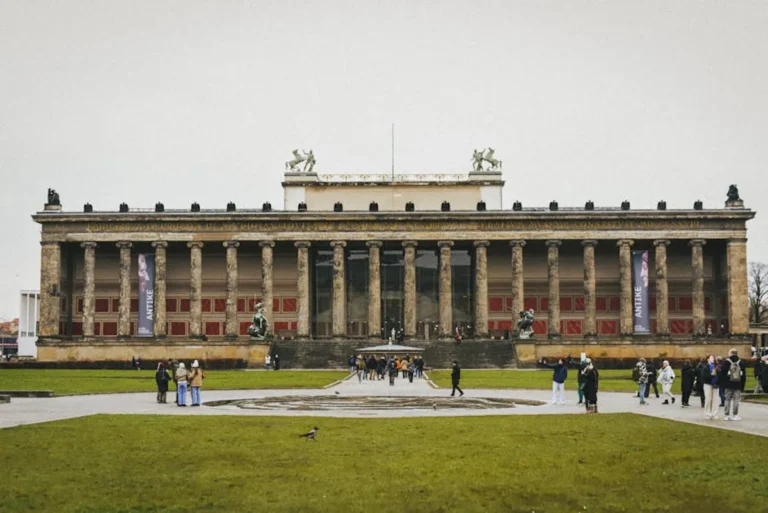
The Alte Nationalgalerie, another jewel of Museum Island, focuses on 19th-century art, encompassing Neoclassicism, Romanticism, Biedermeier, Impressionism, and early Modernism. Its collection includes works by German masters like Caspar David Friedrich and Adolph Menzel, alongside French Impressionists such as Claude Monet and Auguste Renoir. The building itself, designed as a temple to art, contributes to the overall experience, with grand halls and sculptures. It offers a comprehensive overview of a pivotal century in European art history.
Best for: Art history enthusiasts focusing on 19th-century European painting and sculpture, particularly German Romanticism and early Impressionism.
Pros: Rich collection of influential 19th-century art; beautiful historic building and presentation; less crowded than some other Museum Island institutions.
Cons: Specific focus may not appeal to all art preferences; can feel somewhat overwhelming without prior knowledge of the period.
Verdict: An excellent choice for a deep dive into 19th-century art, offering a serene counterpoint to the more bustling historical museums on the island.
4. Jewish Museum Berlin
The Jewish Museum Berlin, designed by Daniel Libeskind, is as much a architectural statement as it is a historical institution. Its permanent exhibition explores 2,000 years of Jewish history in Germany, focusing on cultural, social, and political aspects, as well as periods of persecution and resilience. The building's zigzagging form, voids, and "Garden of Exile" are integral to the narrative, evoking feelings of absence and displacement. The museum provides a profound and often emotionally impactful experience.
Best for: Visitors seeking a deep, reflective understanding of Jewish history and culture in Germany, and those interested in powerful architectural storytelling.
Pros: Architecturally significant and emotionally resonant design; comprehensive and well-researched historical narrative; offers diverse perspectives on German-Jewish relations.
Cons: Can be emotionally intense; the architecture, while impactful, can also be disorienting for some; requires a significant time commitment for full appreciation.
Verdict: A profoundly moving and intellectually stimulating experience that uses architecture to amplify its historical message, essential for understanding a critical aspect of German heritage.
5. East Side Gallery
The East Side Gallery is not a traditional museum but an open-air art gallery located on a preserved section of the Berlin Wall. It features over 100 murals painted by artists from around the world, commenting on political changes and hopes for a better future following the fall of the Wall in 1989. This kilometer-long stretch serves as a powerful memorial to freedom and a stark reminder of Cold War division. It offers a unique blend of historical site and contemporary street art.
Best for: Visitors interested in Cold War history, street art, and public memorials, seeking a free and accessible outdoor experience.
Pros: Free and open 24/7; iconic historical site with powerful artistic expressions; easily accessible along the Spree River.
Cons: Exposed to weather conditions; can be very crowded with tourists; some murals have suffered from vandalism or wear over time; limited interpretive signage compared to indoor museums.
Verdict: An indispensable, free cultural landmark that combines historical significance with artistic expression, providing a tangible link to Berlin's recent past.
6. Topography of Terror
Located on the site of the former Gestapo and SS headquarters, the Topography of Terror documents the instruments of Nazi terror and the crimes committed during World War II. The exhibition, both indoors and outdoors, presents original photographs, documents, and historical texts that illustrate the rise of Nazism and its devastating impact. The outdoor exhibition runs along a preserved section of the Berlin Wall and excavated remnants of the former prison cells. This site provides a stark, unvarnished look at a dark chapter of history.
Best for: Those seeking a detailed and sobering account of Nazi Germany's atrocities and the mechanisms of state terror, particularly history students and researchers.
Pros: Free admission; profoundly impactful historical content; located on an authentic historical site; comprehensive and well-researched documentation.
Cons: Emotionally challenging content; can be overwhelming due to the density of information; not suitable for young children.
Verdict: A critically important, free historical site that offers an unflinching examination of Nazi crimes, providing essential context for understanding 20th-century history.
7. Hamburger Bahnhof – Museum für Gegenwart – Berlin
Housed in a former railway station, Hamburger Bahnhof is Berlin's premier museum for contemporary art. Its collection spans art from the second half of the 20th century to the present day, with a strong focus on Minimalism, Conceptual Art, Pop Art, and video art. Key artists represented include Andy Warhol, Joseph Beuys, and Robert Rauschenberg. The vast, industrial spaces of the building are well-suited for large-scale installations and rotating exhibitions, offering a dynamic experience of current artistic trends.
Best for: Contemporary art enthusiasts, those interested in post-1960s art movements, and visitors looking for large-scale installations and experimental works.
Pros: Extensive collection of international contemporary art; impressive exhibition spaces; features works by seminal contemporary artists; often hosts thought-provoking temporary exhibitions.
Cons: Contemporary art may not appeal to all tastes; located slightly outside the main Museum Island cluster; can require a significant time investment to explore fully.
Verdict: An essential destination for anyone interested in modern and contemporary art, offering a comprehensive and often challenging perspective on recent artistic developments.
8. DDR Museum
The DDR Museum provides an interactive and immersive look into daily life in East Germany (German Democratic Republic). Unlike traditional museums, it encourages visitors to touch, feel, and experience artifacts from the socialist era. You can sit in an original Trabant car, browse through a recreated East German apartment, or watch propaganda films. The museum aims to present an authentic, albeit sometimes nostalgic, depiction of life behind the Iron Curtain, moving beyond political narratives to explore everyday culture.
Best for: Visitors interested in social history, Cold War daily life, and interactive museum experiences, particularly families and those seeking a less formal historical overview.
Pros: Highly interactive and engaging exhibits; offers a unique perspective on East German daily life; family-friendly approach to history; central location near Museum Island.
Cons: Can feel somewhat cramped and crowded due to its popularity; some argue it presents a slightly romanticized view of the DDR; not ideal for those seeking a purely academic historical account.
Verdict: An entertaining and informative experience that brings the history of East Germany to life through hands-on interaction, suitable for a broad audience.
9. Gemäldegalerie
The Gemäldegalerie, located in the Kulturforum, houses one of the world's foremost collections of European painting from the 13th to the 18th centuries. Its extensive holdings include masterpieces by Rembrandt, Rubens, Botticelli, Raphael, Caravaggio, and Jan van Eyck. The museum is organized chronologically and by school, allowing for a clear progression through the history of European art. The calm, spacious galleries provide an ideal environment for contemplative viewing of these artistic treasures.
Best for: Connoisseurs of Old Master paintings and classical European art, seeking a comprehensive collection of pre-19th century masterpieces.
Pros: Exceptional collection of world-renowned European painters; spacious and well-lit galleries; provides a deep dive into art history before the modern era.
Cons: May not appeal to those preferring modern or contemporary art; requires a significant time commitment to appreciate the breadth of the collection; located outside the Museum Island cluster.
Verdict: A world-class institution for classical European painting, offering a rich and rewarding experience for serious art lovers in a tranquil setting.
10. Deutsches Technikmuseum
The Deutsches Technikmuseum (German Museum of Technology) is a vast and comprehensive museum dedicated to showcasing the history of technology and its impact on society. Its extensive collections cover aviation, shipping, rail transport, computing, textiles, and more. Highlights include historic aircraft, steam locomotives, and interactive exhibits that demonstrate scientific principles. The museum is particularly engaging for families and those with an interest in engineering and industrial history, offering both large-scale machinery and detailed models.
Best for: Families, children, and anyone with an interest in engineering, industrial history, and the evolution of technology across various fields.
Pros: Highly interactive and engaging for all ages; vast and diverse collections covering many technological fields; includes impressive large-scale exhibits like aircraft and trains; features an outdoor park with historical railway facilities.
Cons: Very large, requiring a full day or multiple visits to see everything; can be overwhelming due to the sheer volume of exhibits; located a bit off the main tourist routes.
Verdict: An excellent choice for a family-friendly and educational day out, offering a comprehensive and hands-on exploration of technological innovation.
Maximizing Your Berlin Cultural Visit
To make the most of your time exploring Berlin's museums and galleries, consider these practical strategies:
- Purchase Passes: If planning to visit multiple institutions, especially on Museum Island, the Berlin Museum Pass (valid for 3 days) often provides significant savings and convenience.
- Book Timed Entry: For popular museums like the Pergamon or Neues Museum, booking tickets online for specific time slots can help you bypass long queues, especially during peak season.
- Prioritize and Group: Identify your top 2-3 must-see institutions and group others by geographical proximity. Museum Island offers a concentrated experience, while the Kulturforum (Gemäldegalerie, Philharmonie) is another cluster.
- Allocate Sufficient Time: Avoid rushing. Larger museums warrant at least 3-4 hours, while smaller galleries might take 1-2. Factor in travel time between locations.
- Check Opening Hours and Days: Museum opening times vary, and many are closed on Mondays. Always verify schedules before planning your visit.
- Consider Guided Tours: For deeper insights into specific collections or historical contexts, many museums offer guided tours in multiple languages, which can enhance the experience.
Frequently Asked Questions
Do I need to book museum tickets in advance in Berlin?
For popular museums like the Pergamon Museum or Neues Museum, booking timed entry tickets online in advance is highly recommended, especially during peak tourist seasons, to avoid long queues and ensure entry.
What is the Berlin Museum Pass?
The Berlin Museum Pass offers free entry to over 30 museums and exhibitions over three consecutive days. It can be a cost-effective option if you plan to visit several paid institutions within a short period.
Are there any free museums or galleries in Berlin?
Yes, several significant institutions offer free admission, including the East Side Gallery (open-air), Topography of Terror, and the Memorial to the Murdered Jews of Europe. Some smaller galleries may also have free entry.
How much time should I allocate for a museum visit?
For major museums like the Pergamon or Deutsches Technikmuseum, plan for at least 3-4 hours. Smaller galleries or specialized exhibitions might take 1-2 hours. Always consider your personal interest level and pace.
Is Museum Island accessible for visitors with disabilities?
Most museums on Museum Island have made efforts towards accessibility, including ramps, elevators, and accessible restrooms. However, due to the historical nature of some buildings, it's advisable to check specific museum websites for detailed accessibility information before your visit.